
All about Pamonha
Corn cakes from paradise

I believe I already mentioned to you all that Brazil is a paradise for coeliac or otherwise gluten-free people. There is so much corn- and tapioca-based foods, in addition to lots of rice, fresh vegetables and fruits, and simple fish and meats. It’s been a breeze eating out and my husband’s friends and family have barely been inconvenienced by my Disease™ because flour/gluten is only a very minor aspect of most people’s kitchen repertoire.
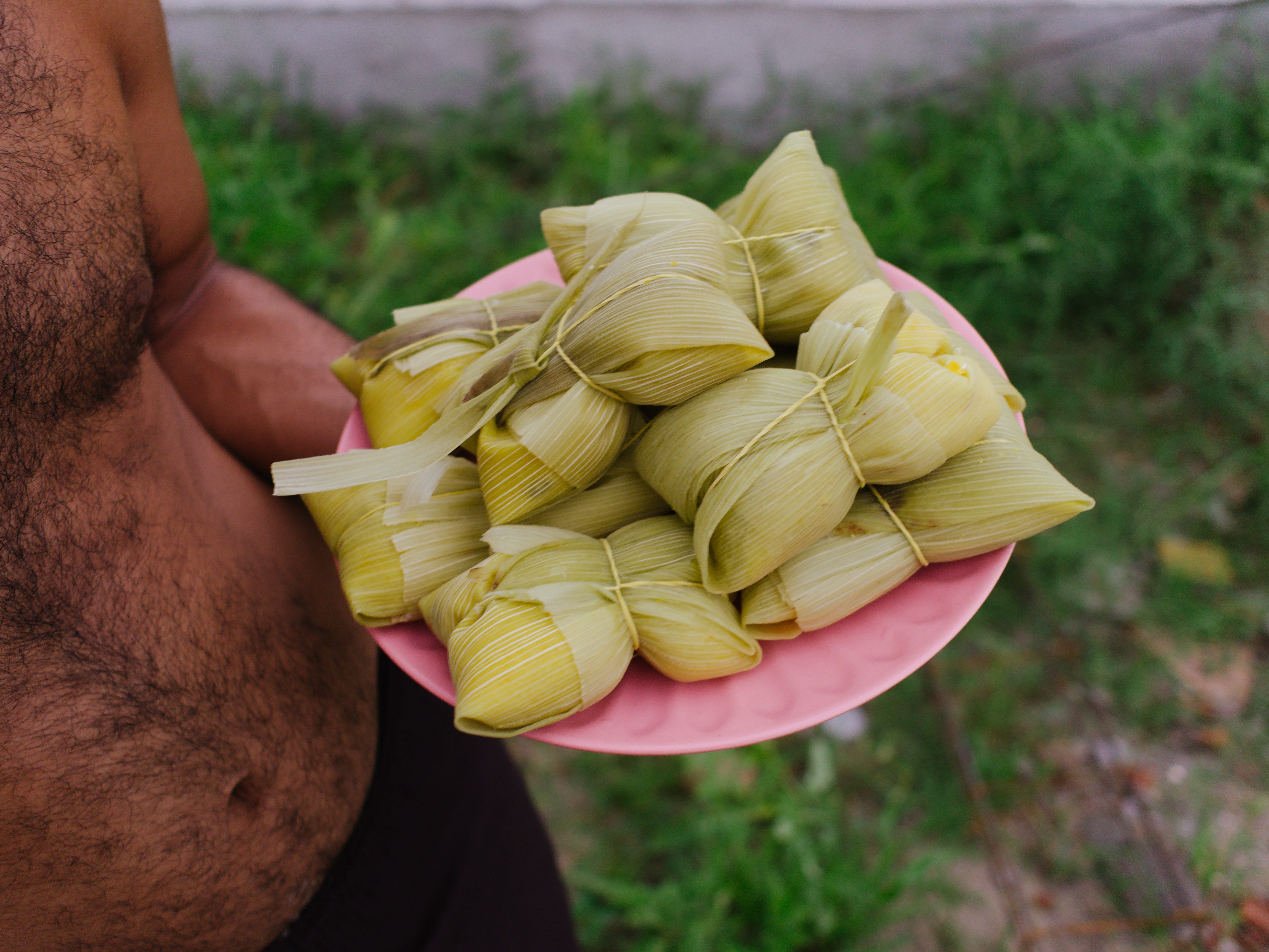
My husband’s mother, Rosania, taught me how to make pamonha, a speciality of Goiás, the region where she (and my husband João) grew up. João fondly recalls the experience of making pamonha as a family, when everyone would be united and performing their separate tasks, chatting and drinking for hours. It’s quite a lengthy process and it was a fine reward to unwrap the pamonha after boiling and enjoy the fruits of their hard work, gathered around the table.
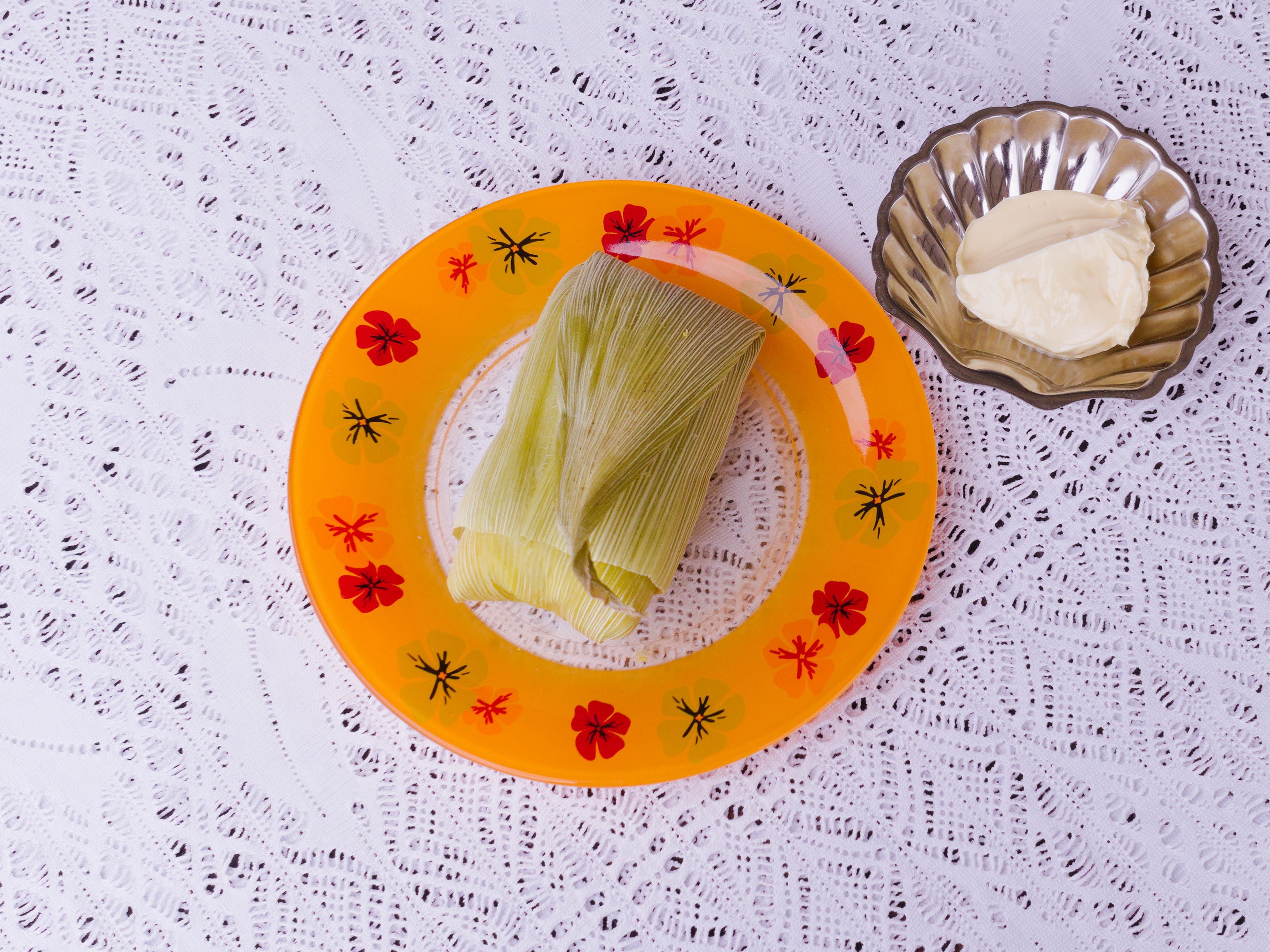
I’m collecting ideas to develop Brazilian recipes for use in European/North American kitchens and will formalise this recipe once I’ve moved to the Netherlands this summer. So for now, I’m going to give you an overview of the traditional process without specific measurements and without tips/tricks for preparing these without fresh corn husks. If you do have access to fresh corn, you can follow this overview and measure instinctually, as Rosania does.
If you’ve made or eaten tamales before, you’ll notice the process and ingredients are familiar. Whereas tamales are made with masa harina, which is the dried product of corn that has been soaked in limewater, these pamonha are made with fresh grated corn. Tamales are turned into a dough by adding water to the dry ‘flour’, along with water or stock and various seasonings. Pamonha is more like batter, wet enough to be scooped into the corn husks. I draw the comparison because it helped me make sense of the logic and cooking technique. My thinking of pamonha as comparable to tamales led to my eating them with typical tamale companions—beans, tomato salsa, cilantro—much to the confusion of João’s family.
First, we gathered on the patio to cut and shuck the corn. João’s father used what I can only call a machete to remove the bottom ends, then the rest of us removed the outer husks, tucking each ‘leaf’ into the next to save similarly-sized pairs, and placing these aside to become the packets inside which the pamonha would boil.
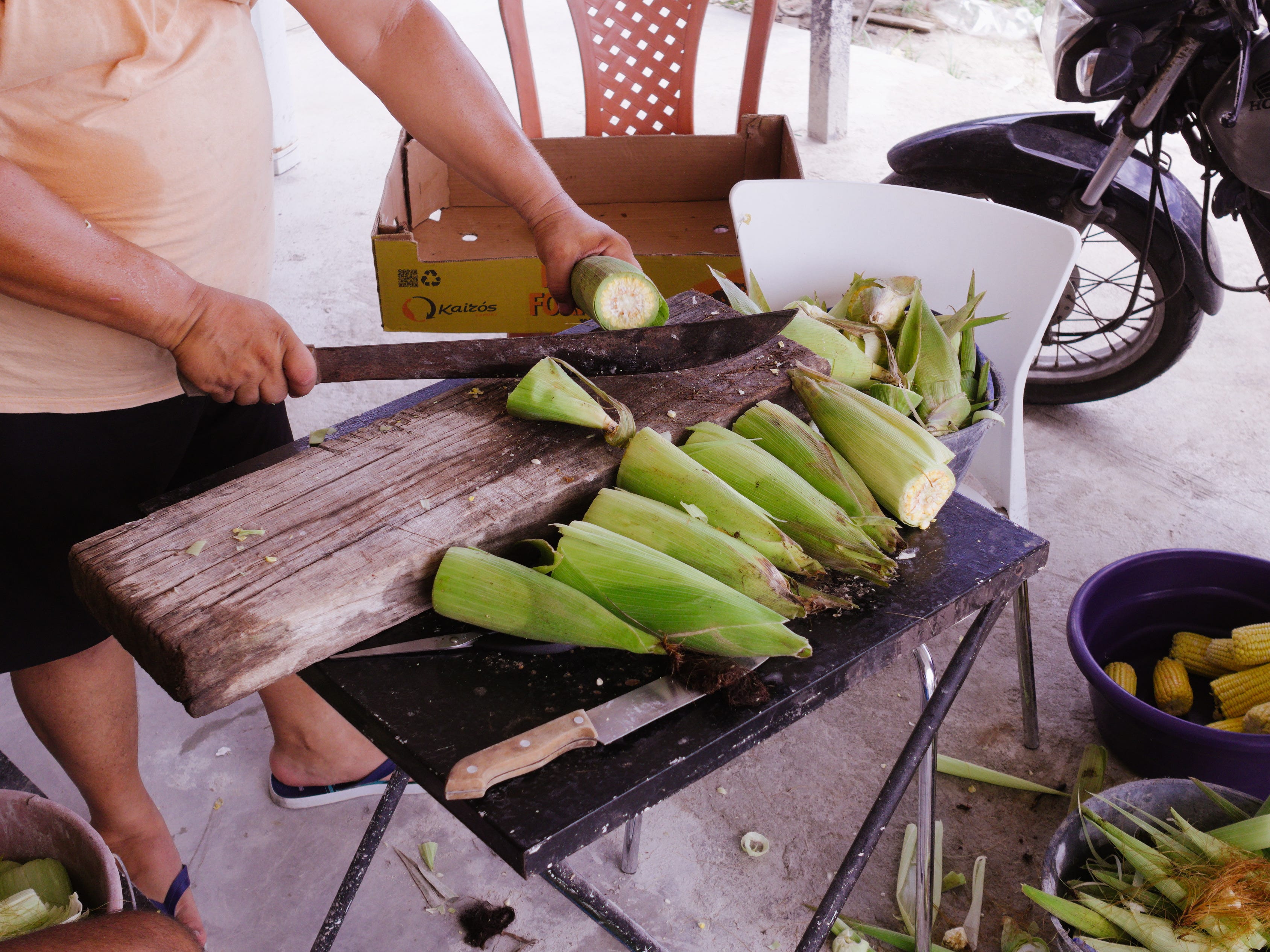
Rosania explained that the fresher, paler corn cobs were ideal for pamonha because they contain more moisture and less starch, becoming softer and creamier in their final form. The more deeply coloured, harder, mature cobs were kept aside to turn into curau, a porridge-like warm pudding, and bolo de milho (corn cake), both of which I’ll tell you more about soon.
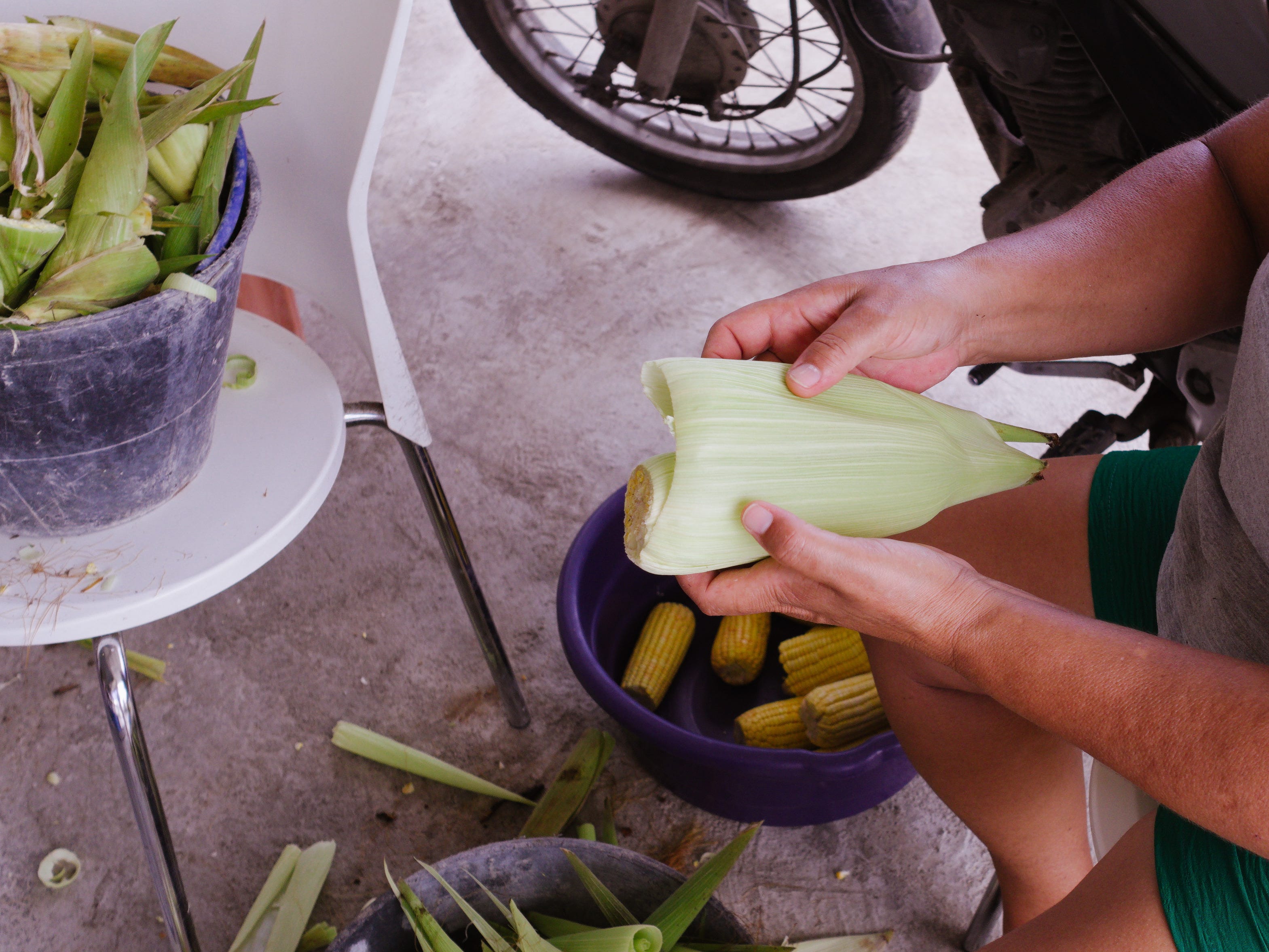
Only the largest and most flawless husk layers are kept for filling and the rest can be discarded. Then we washed the corn cobs and blanched the husks in boiling water to sanitise them. Rosania then showed me how to grate the corn on a large metal grater that her husband made. This is one of the key steps I will later test with cheese graters and food processors so you all can achieve a similar batter texture at home. After grating, Rosania pressed and slid the dull edge of a knife along each cob to extract any remaining juice and corn flesh.
Now that we had our bowl of juicy, grated corn, all Rosania added was salt (to taste) and very hot oil until the texture became more homogenous and the mixture tasted just slightly cooked. Now the crafty part began, when we folded, filled and tied each pamonha to prepare them for boiling.
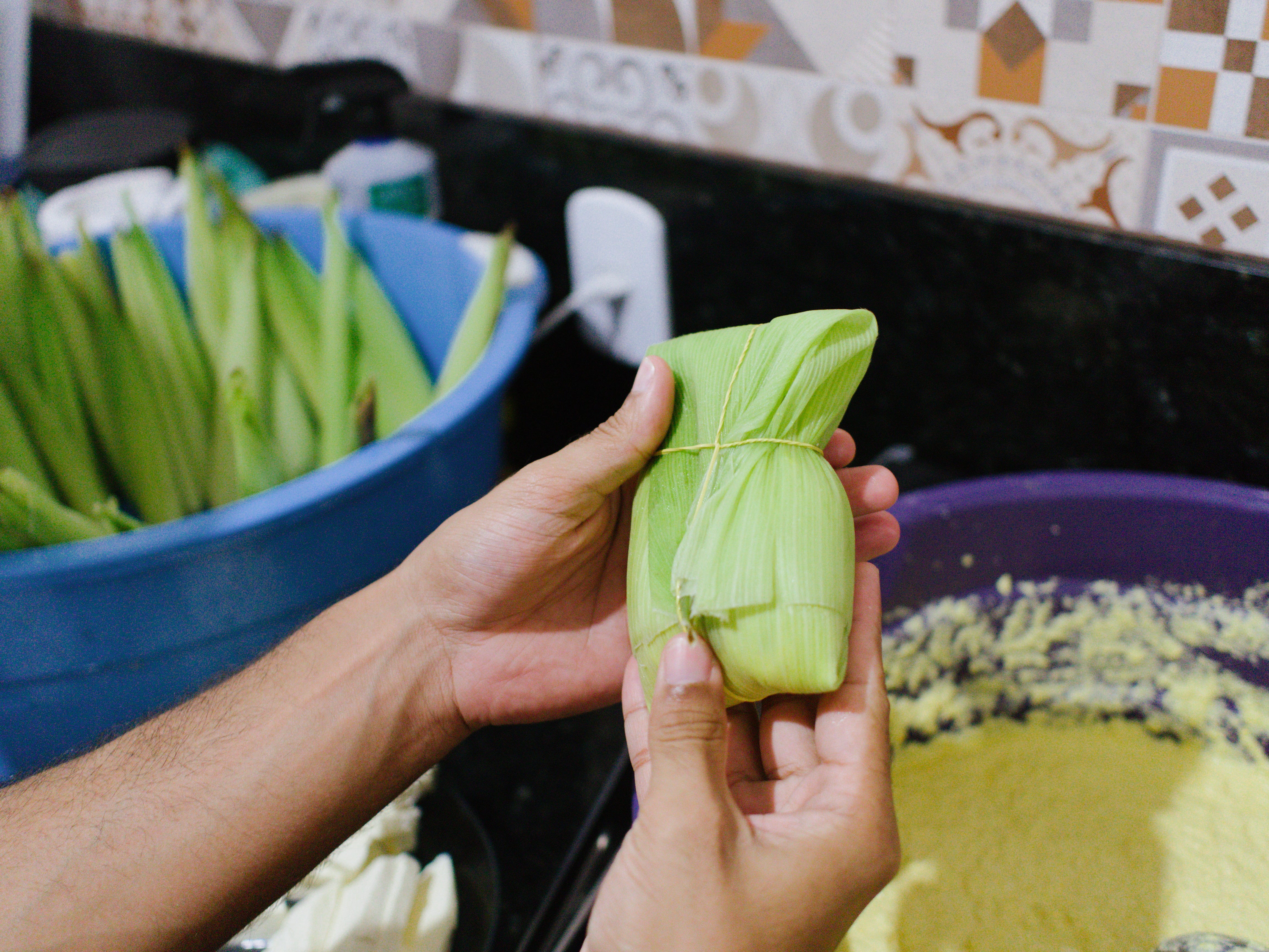
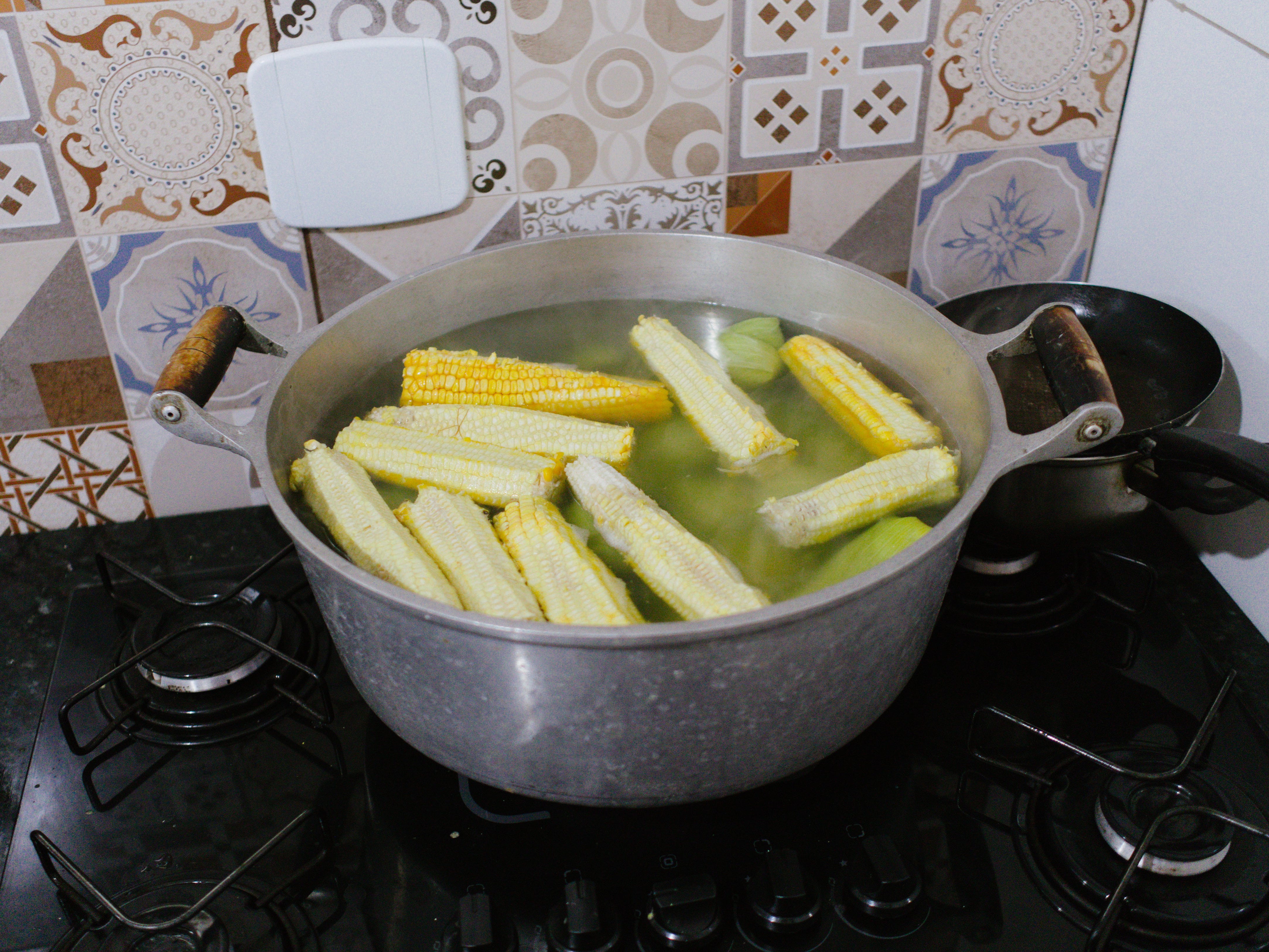
Each husk layer pair was shaped around our hands then folded upwards to create a cup into which the pamonha batter was scooped. A generous portion of queijo fresco (a salty, fresh cheese typical of Goiás) was added to each. I had sautéed some mushrooms the day before and added some of those to my pamonha, which turned out delicious. Then an additional husk layer is added, orientated the opposite direction, and folded over the rest to create a seal. We tied rubber bands around each to keep everything together. Once a large pot of water was simmering, all the pamonha were added at once and weighed down with the spent corn cobs to keep them from bobbing to the surface. Rosania checked one after 25 minutes and decided to cook them for five minutes more and then all were removed.
Some of the batter was kept aside and Rosania added sugar to this and we proceeded to make a second batch of sweet pamonha—still with cheese of course, a Brazilian wouldn’t fathom a pamonha without cheese.
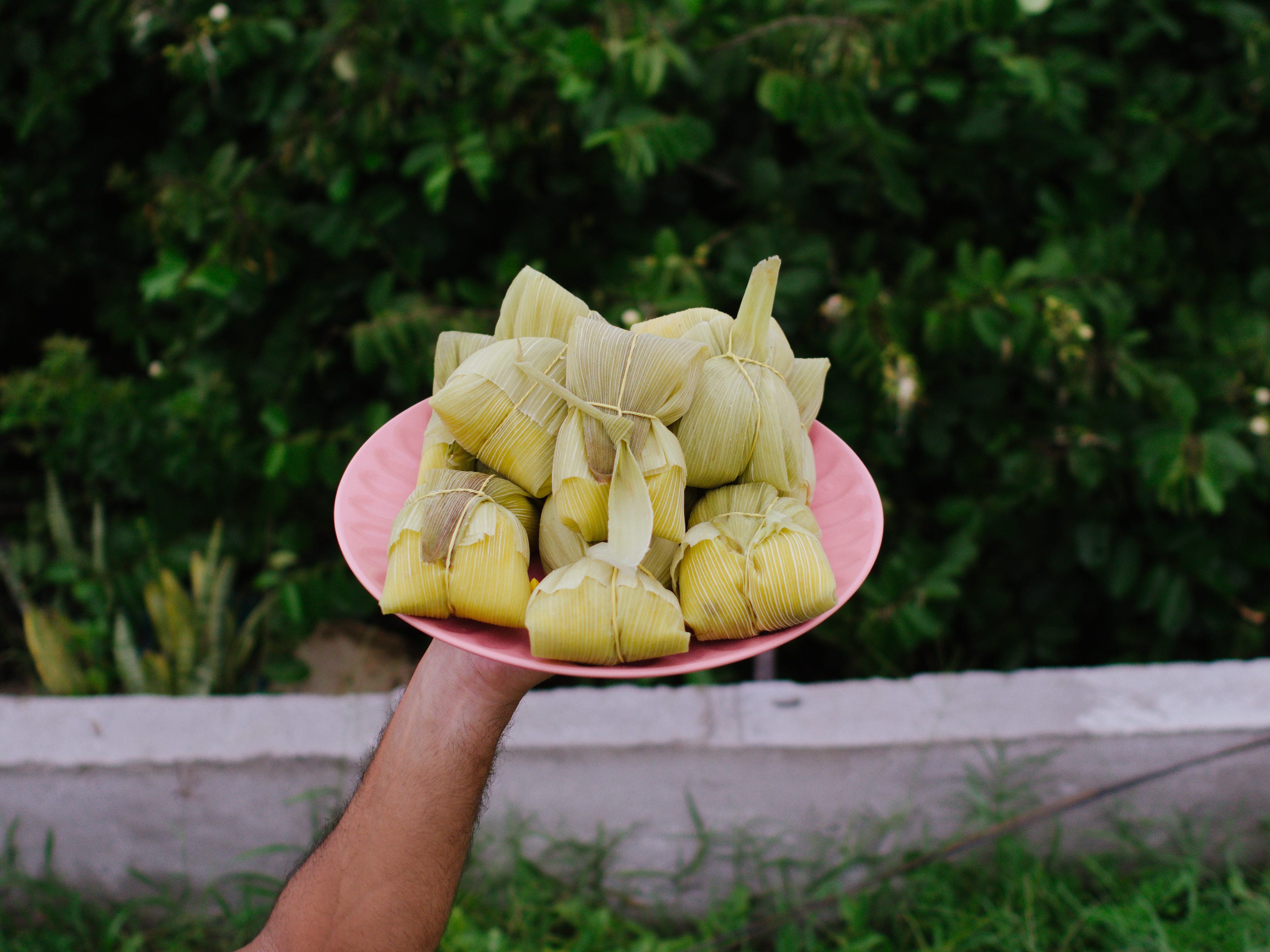
Then we ate! Each of us unwrapped a pamonha, still steaming inside the husk, and topped it with a spoonful of margarine. The texture is pretty similar to a tamale but the flavour is totally distinct: sweet, somewhat fresh or ‘green’ from the corn, but still deeply savoury from the added salt and cheese. This is when I added tomato salsa and black beans to mine, which the family found mildly offensive, but I stand by the addition. Corn and beans are natural siblings, both in flavour and nutritionally (each provide amino acids the other lacks, forming complete protein when eaten together). And tomato salsa brightens it all beautifully.
The sweet ones were also delicious with an afternoon cup of black coffee. I’m so excited to test pamonha at home, developing some savoury additions and flavouring options as well as exploring how to transform the sweet pamonha (like…couldn’t this batter be the filling for a tart? hmmm).
This is what you can expect from Haus of GF for the next month or two while João and I await our visas to The Netherlands. We’re travelling through Rio, Goiás, Bahia and Minas Gerais, collecting regional home-style recipes for a cookbook proposal I’m developing. I’m excited to write up these experiences for you all as we travel so you can get a taste of gluten-free foods in Brazil, and hopefully inspire you to consider incorporating these ingredients and techniques in your home.
Follow me on Instagram for videos of my recipes and subscribe below to receive premium-only recipes, as well as the full archive. Feel free to comment, DM me, or email me at zak@hausofgf.com